


 Home /
 11.1V 5Ah 3S1P 21700 Li-Ion Battery Pack for Electric Facial Cleansing Devices


Table of Contents
- Understanding the 11.1V 5Ah 3S1P Configuration
- Why 21700 Cells Are Suitable for Beauty Devices
- Stable Power for Consistent Cleansing Performance
- Battery Protection for Safer Operation
- Customization for Different Facial Cleansing Devices
- Charging System Compatibility
- Quality Control and Testing
- Applications Beyond Facial Cleansing Brushes
- Conclusion
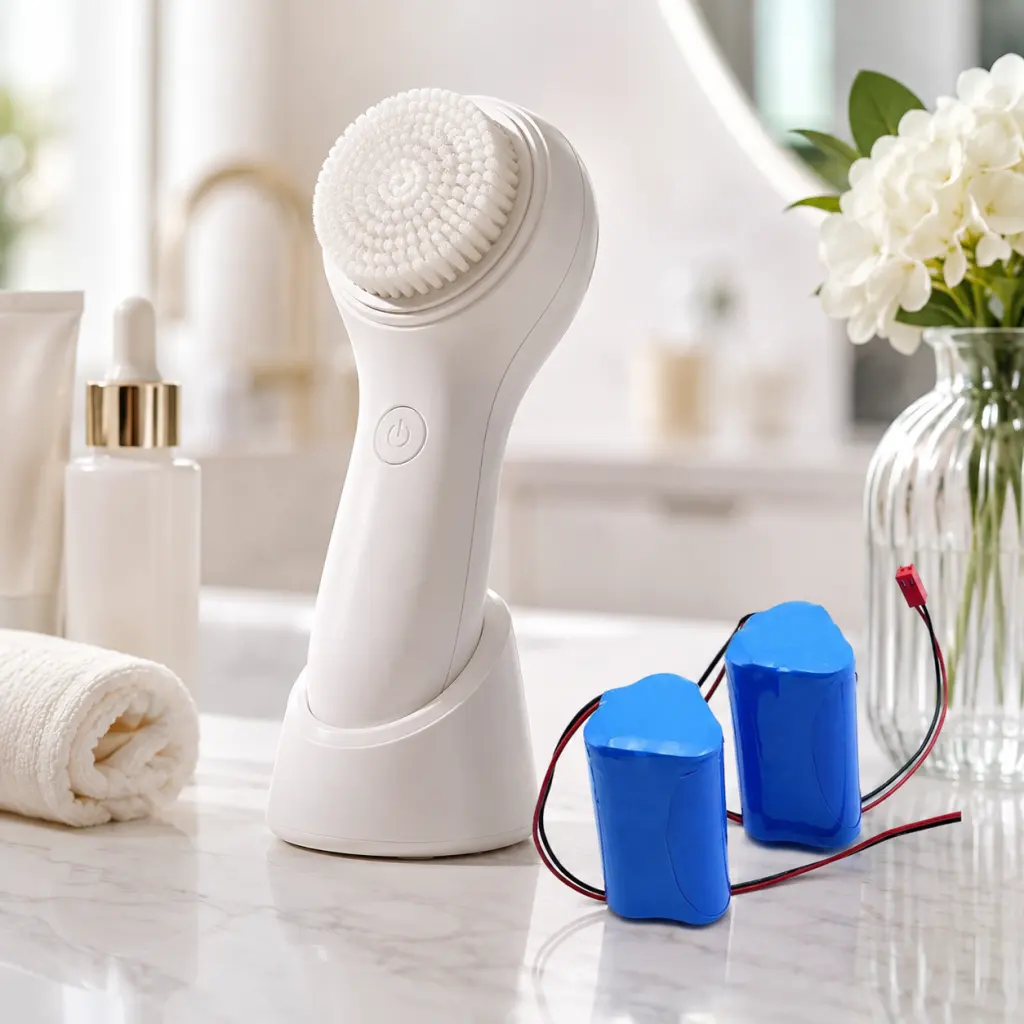
Electric facial cleansing devices are becoming increasingly popular in home skincare routines and professional beauty treatments. Compared with traditional manual cleansing methods, rechargeable facial cleansing equipment can provide consistent vibration, rotation, suction, heating, or massage functions. However, these functions require a stable and reliable power source.
An 11.1V 5Ah 3S1P 21700 lithium-ion battery pack offers a practical power solution for electric facial cleansing devices that require extended operating time, stable voltage, compact construction, and rechargeable performance. By combining high-capacity 21700 cells with an appropriate protection circuit and customized connection system, this battery pack can support a wide range of portable beauty and personal care products.
Understanding the 11.1V 5Ah 3S1P Configuration
The battery pack uses three 21700 lithium-ion cells connected in series, which is known as a 3S1P configuration. The three cells increase the nominal voltage to 11.1V while maintaining a capacity of 5000mAh.
A fully charged 3S lithium-ion battery pack normally reaches approximately 12.6V, while the operating voltage gradually decreases during discharge. Therefore, the facial cleansing device and its internal electronic system should be designed to work within the battery pack’s voltage range.
The 5000mAh capacity provides a relatively large energy reserve for portable skincare equipment. Depending on the device’s power consumption, operating mode, motor speed, heating function, and control system, the battery can support multiple treatment sessions before recharging is required.
Why 21700 Cells Are Suitable for Beauty Devices
The 21700 lithium-ion cell is larger than the commonly used 18650 cell and can provide higher capacity within a single-cell format. This makes it suitable for products that need longer runtime without using too many individual cells.
For electric facial cleansing equipment, 21700 cells offer several practical advantages. Their high energy density supports compact product development, while their discharge performance helps provide stable power to motors, pumps, LED systems, heating elements, sensors, and electronic control boards.
Using three high-capacity cells in a 3S1P structure can also simplify battery assembly compared with configurations that require several parallel cells. Fewer cells may mean fewer welding points, a simpler internal structure, and easier integration into the product enclosure.
Stable Power for Consistent Cleansing Performance
Electric facial cleansing devices often use small motors to produce sonic vibration, brush rotation, suction, or massage movement. If the battery voltage drops too quickly, the device may experience reduced speed, unstable operation, or inconsistent treatment performance.
An 11.1V lithium-ion battery pack can provide stable energy output during repeated cleansing cycles. This helps the device maintain more consistent motor performance and allows the electronic control system to operate reliably.
For products with multiple working modes, such as low-speed cleansing, deep cleansing, massage, warming, cooling, or LED skincare functions, sufficient battery capacity is especially important. A 5Ah battery pack can reduce the need for frequent charging and improve convenience for users.
Battery Protection for Safer Operation
Safety is a key consideration when developing batteries for beauty and personal care equipment. Facial cleansing devices are often used close to the skin and may be operated in humid environments such as bathrooms or beauty salons.
The battery pack should include a suitable protection circuit module. Depending on the device requirements, the circuit can provide protection against overcharge, over-discharge, overcurrent, and short circuits. Temperature monitoring may also be added when required.
The battery manufacturer must select protection parameters according to the device’s actual current, peak load, charging method, motor startup requirements, and operating temperature. Protection settings that are too low may cause the battery to shut down during normal operation, while unsuitable settings may reduce the overall safety margin.
The final device design should also include proper insulation, waterproofing, sealing, ventilation, and mechanical protection. The battery pack should not be exposed directly to water, cosmetics, cleaning liquid, or excessive heat.
Customization for Different Facial Cleansing Devices
Different beauty products have different internal structures, power requirements, and charging systems. Therefore, the battery pack often needs to be customized rather than selected only by voltage and capacity.
The dimensions and arrangement of the 21700 cells should match the available battery compartment. The pack may be arranged in a straight line, triangular structure, or another configuration depending on the product design.
Connector type, wire length, wire gauge, polarity, insulation material, and battery casing can also be customized. Some projects may require heat-shrink film, a plastic enclosure, foam padding, brackets, labels, or additional mechanical protection.
The battery management system should be matched to the device’s continuous current and maximum peak current. For facial cleansing equipment with motors or heating functions, the manufacturer should evaluate startup current and temporary power demand before confirming the protection circuit.
Charging System Compatibility
A 3S lithium-ion battery pack requires a charger designed for three cells connected in series. The charging voltage should normally reach 12.6V, and the charging current should be selected according to the cell specifications, desired charging time, temperature conditions, and product design.
Using an incorrect charger can affect battery performance and create safety risks. Device manufacturers should confirm the charging IC, charging port, adapter output, battery protection parameters, and charging communication requirements during product development.
USB charging can be used in some facial cleansing products, but the internal circuit must boost and manage the input voltage correctly. The charging solution should be validated together with the battery pack rather than treated as a separate component.
Quality Control and Testing
A reliable battery pack should undergo controlled production and testing before installation in the final beauty device. Incoming cells should be checked for voltage, internal resistance, capacity, appearance, and consistency.
During assembly, welding quality, wire connections, insulation, protection boards, and polarity should be inspected. Finished battery packs may be tested for capacity, charge and discharge performance, protection functions, voltage balance, dimensions, and connector compatibility.
For export projects, transportation and market compliance requirements should also be considered. The required testing and documentation may vary according to the destination country, shipping method, device category, and customer requirements.
Applications Beyond Facial Cleansing Brushes
Although this battery pack is designed for electric facial cleansing devices, it may also be suitable for other rechargeable beauty and personal care equipment with similar voltage and power requirements.
Potential applications include facial massage devices, pore cleansing equipment, exfoliating tools, skincare instruments, cordless beauty machines, salon equipment, heated skincare products, and portable cosmetic devices.
However, the battery should always be evaluated according to the actual product load, available installation space, charging system, safety requirements, and expected operating time.
Conclusion
The 11.1V 5Ah 3S1P 21700 lithium-ion battery pack provides a high-capacity and rechargeable power solution for electric facial cleansing devices. Its 21700 cell format supports extended runtime, stable power delivery, and a relatively compact three-cell structure.
For successful product integration, manufacturers should carefully confirm voltage range, operating current, peak load, battery dimensions, charging compatibility, protection settings, connector specifications, and environmental conditions. A properly customized battery pack can help facial cleansing devices achieve dependable performance, convenient cordless operation, and a better overall user experience.
Talk to the Manufacturer
Resources & Insights
High Capacity Lithium Battery for Wearables: High-Voltage LiPo Cell Design
2026-10-19
Cylindrical Battery Packs for Laptops: 2S vs 3S vs 4S Battery Design
2026-10-19
Stage Lighting Battery Pack: Prevent Voltage Drop & LED Flicker
2026-10-19
Best Rechargeable Batteries for Smart Devices: Performance, Safety, and Selection Guide
2026-10-19


